Sacraments
In accord with Biblical and Christian teaching, we believe that we are sinners, constantly in need of divine grace. We also believe that God is gracious and loving, always making available the grace we need to respond to God’s love.
God has provided certain means through which grace is surely and immediately available. These means are not to be understood as ways of earning salvation, for that is an unmerited gift. Instead, they are ways to receive, live in, and grow in divine grace. The Wesleyan tradition has continued to emphasize the practice of these means of grace throughout our salvation process.
The Greek word used in the early church for sacrament is “mysterion,” usually translated as “mystery.” It indicates that through sacraments, God discloses things that are beyond human capacity to know through reason alone. The sacraments were instituted by Christ and given to the church. Holy Baptism and Holy Communion have been chosen and designated by God as special means through which divine grace comes to us.
Baptism
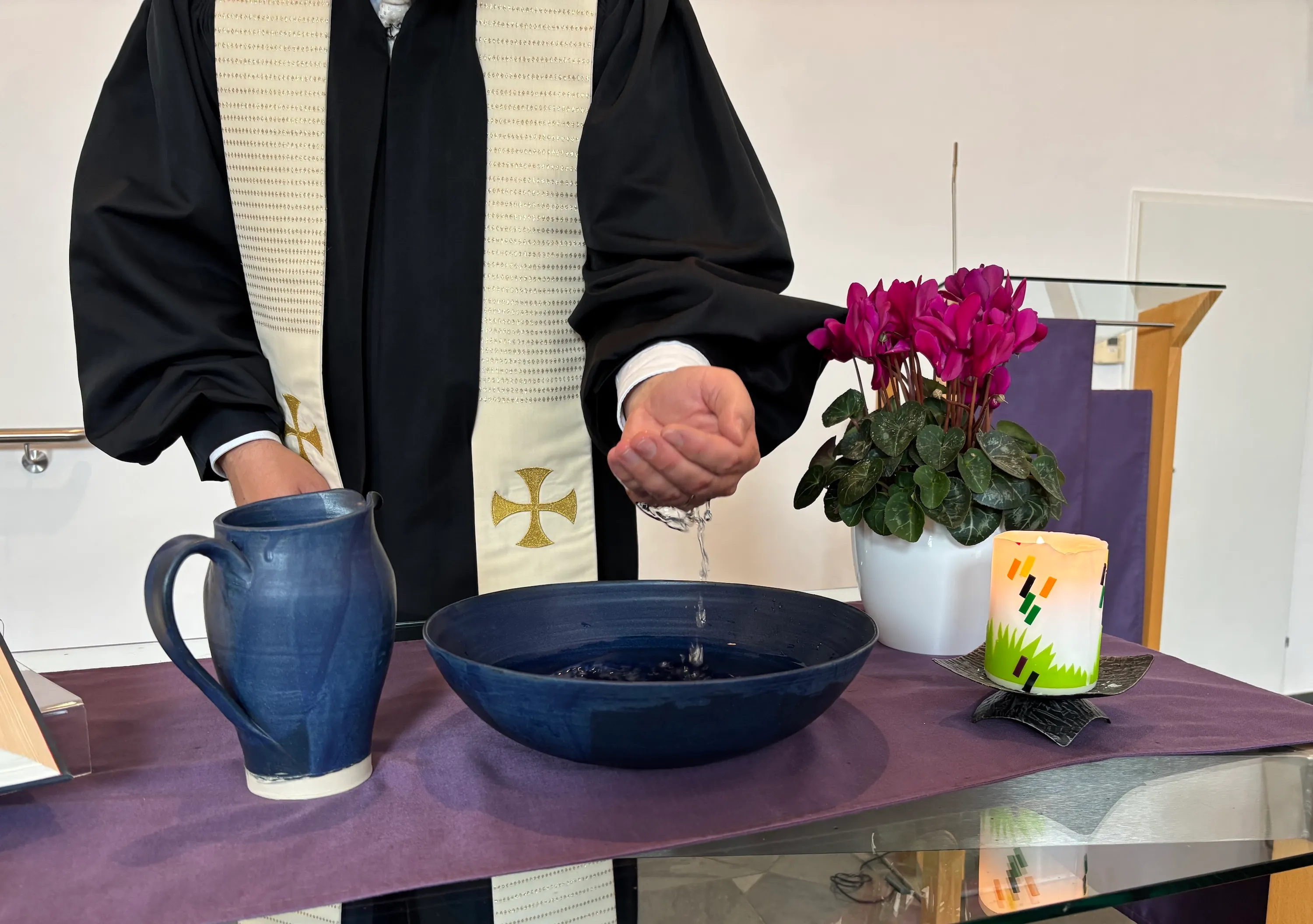
Holy Baptism is the sacrament that initiates us into the body of Christ through water and the Spirit. In baptism we receive our identity and mission as Christians. In the United Methodist Church, the sacrament of baptism is offered to persons of all ages.
Die Heilige Taufe ist das Sakrament, das uns durch Wasser und Geist in den Leib Christi eingliedert. In der Taufe empfangen wir unsere Identität, unsere Sendung und unseren Auftrag als Christ*innen. In der Evangelisch-methodistischen Kirche wird das Sakrament der Taufe Menschen aller Altersgruppen angeboten.
Communion
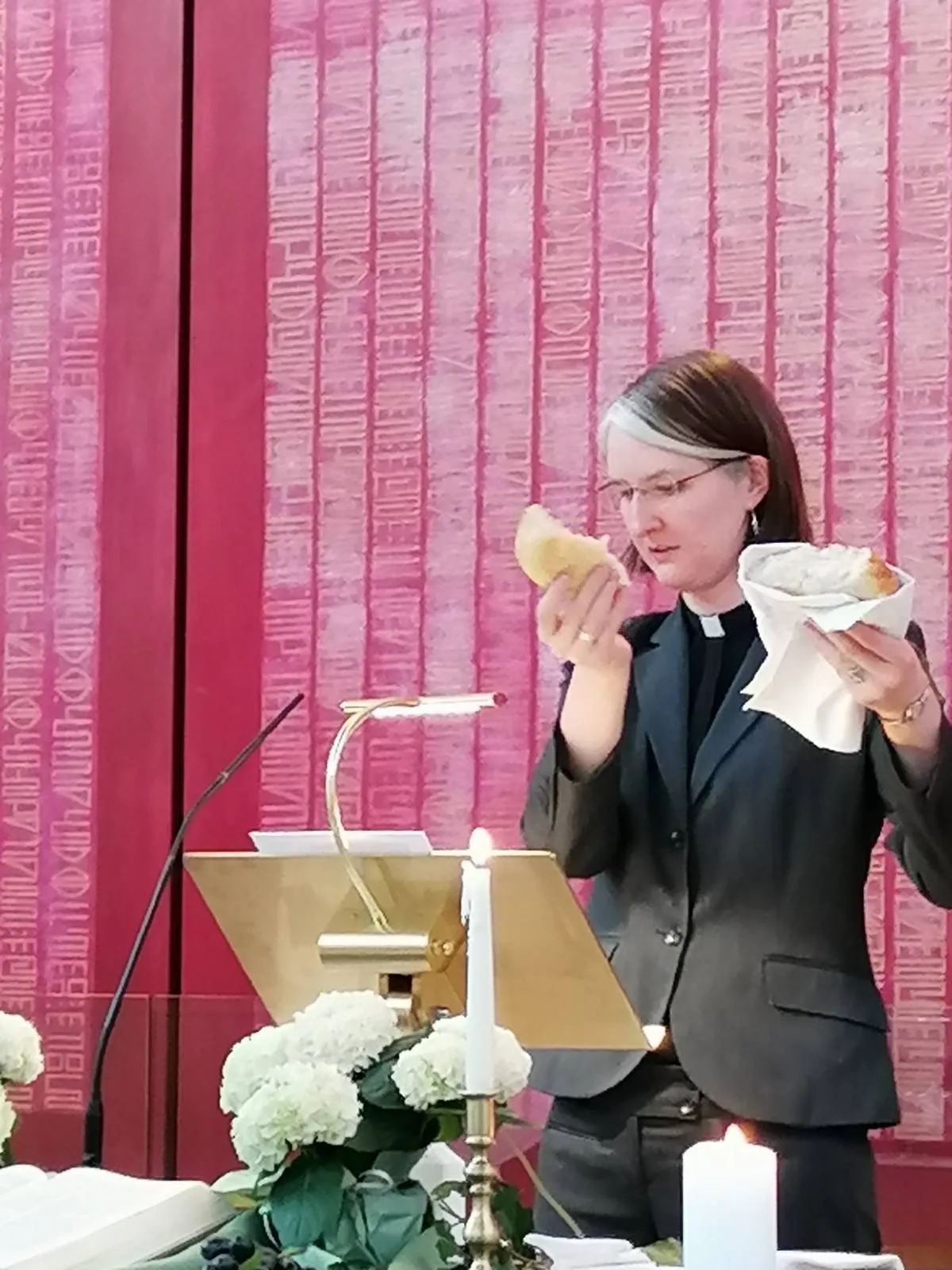
Holy Communion is the sacrament that sustains and nourishes us in our journey of salvation. In the United Methodist Church, we celebrate an open communion table; all persons, regardless of church membership or professed faith, are welcome to receive the bread and wine (or grape juice), which we believe represent the body and blood of Jesus and in which Jesus is present in Spirit.
Das Heilige Abendmahl ist das Sakrament, das uns auf unserem Glaubensweg stärkt und nährt. In der Evangelisch-methodistischen Kirche feiern wir ein offenes Abendmahl, denn Christus selbst ist der Einladende. Alle Menschen, unabhängig von ihrer Kirchenmitgliedschaft oder ihrem Glaubensbekenntnis, sind eingeladen, das Brot und den Wein (in der Regel Traubensaft) zu empfangen, von denen wir glauben, dass sie den Leib und das Blut Jesu darstellen und in denen Jesus im Geist gegenwärtig ist.